
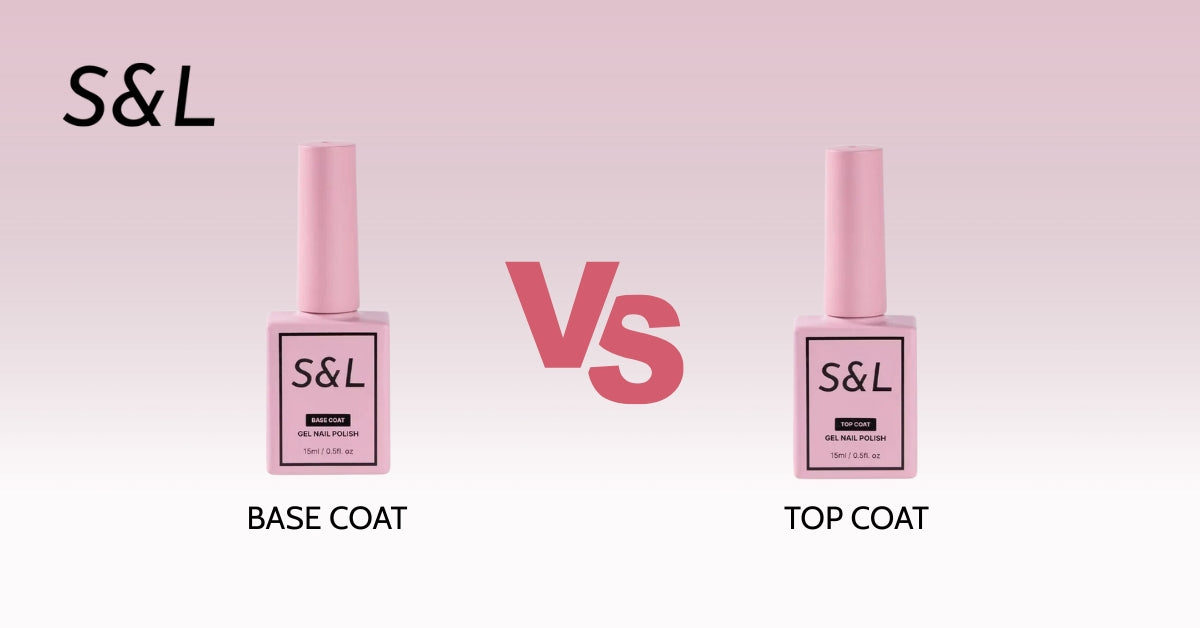
Difference Between Base Coat and Top Coat: Complete Guide for Nails
The two most critical layers in any manicure are the base coat and the top coat. Although they may look similar in their clear bottles, their chemical compositions and purposes are completely opposite. In this article, S&L Beauty will clarify the distinct roles of each layer, explain why both are essential, and provide professional tips for perfect application every time.
What is a Base Coat?
A base coat is the essential foundational layer applied directly onto the prepared natural nail plate. Its primary purpose is twofold: to protect the nail from direct contact with color pigments and to create an adhesive surface for the polish to bond securely. A base coat is formulated to be slightly flexible and sticky, ensuring strong gel adhesion that minimizes lifting and chipping.
The main functions of this crucial layer include filling in natural ridges to create a smooth canvas and strengthening thin or brittle nails. Depending on the formula, there are various types available:
- Standard Base Coat: For standard adhesion and basic protection.
- Rubber Base Coat: Offers flexibility and strength for brittle or peeling nails.
- Builder Base: A thicker viscosity used for added structure or minor extensions.
- Peel-Off Base: Designed for temporary wear and easy, non-acetone removal.
- Vitamin-Infused Base: Contains nourishing ingredients like Keratin or Vitamin E.

What is a Top Coat?
Conversely, a top coat is the hard-curing, final seal applied over the color layer to finalize the manicure. Its main function is to create a durable, scratch-resistant barrier that protects the color from external damage and adds a desired finish. Unlike the base coat, which must remain flexible for adhesion, the top coat cures into a rigid, protective shell.
The top coat provides the final aesthetic touch, whether that is high-gloss shine or a sophisticated matte texture. There are several specialized top coat for nails to choose from:
- Glossy Top Coat: Provides the classic, high-shine "wet look."
- Mattifying Top Coat: Removes all shine for a fashionable velvet finish.
- Fast-Drying Top Coat: Contains solvents that speed up the drying time of regular polish.
- UV Protection Top Coat: Includes UV inhibitors to prevent fading and color change.
- Long-lasting Sealing Top Coat: Designed with extra durable polymers for extended wear.

Key Differences Between Base Coat and Top Coat
The fundamental difference between base coat and top coat lies in their chemical composition and the specific problem they are engineered to solve. A base coat interacts directly with the keratin of the nail to promote adhesion and health, while a top coat interacts with the polymers of the color polish to provide a rigid, aesthetic finish. They are chemically incompatible when used out of order.
The placement in the manicure sequence is the simplest distinction: the base coat always goes under the color, and the top coat always goes over it. Base coats are typically formulated to leave a sticky inhibition layer after curing, whereas many gel top coat formulas are "no-wipe" for a clean, non-tacky finish.
| Feature | Base Coat | Top Coat |
| Primary Function | Protect & Prep Nail | Seal & Finish Color |
| Placement | Under color layer | On top of color layer |
| Texture/Cure | Flexible, sticky for adhesion | Hard, rigid for durability & shine |
| Benefits | Prevents staining, strengthens nails | Shine, scratch resistance, prevents chipping |
Why Both Are Essential for a Perfect Manicure?
Skipping either the base coat or the top coat fundamentally compromises the integrity and duration of the manicure. If you omit the base coat, highly pigmented colors can stain the natural nail, and the polish will lift or peel off within days due to poor gel adhesion. The manicure will lack the foundation required to flex with the nail.
Conversely, omitting the top coat leaves the color exposed and vulnerable to fading, scratching, and dullness. The porous color layer quickly absorbs moisture and oils, which causes the edges to wear down and chip prematurely. Using both layers ensures longer-lasting color and maintains a professional, flawless finish from day one to removal.

How to Apply Base Coat and Top Coat Properly
The correct application of both layers is as critical as the products themselves. The key to success is thin, even layers applied meticulously, paying close attention to the free edge of the nail. This prevents flooding the cuticles, which is the most common cause of premature lifting.
Step-by-Step Application:
- Nail Prep: File, lightly buff, and cleanse the nail plate thoroughly to remove all oils and dust.
- Base Coat: Apply one very thin layer of base coat, scrubbing it into the nail and capping the free edge. Cure under UV/LED light (for gel).
- Color gel polish: Apply two thin coats of color, curing each layer fully.
- Top Coat: Apply a smooth, slightly thicker layer of top coat for nails over the cured color. Ensure the free edge is capped firmly to seal the manicure.
- Final Cure: Cure the final top coat layer completely according to the manufacturer's instructions.
Common Mistakes: Applying layers too thick (causes bubbling and heat spikes), or failing to "cap the free edge" with both the base coat and top coat.
Choosing the Right Base and Top Coat
Your choice should always be driven by your nail health and desired outcome. If you have soft, brittle nails, prioritize a rubber base coat for its flexibility and structural support. For healthy nails seeking high shine, a hard-curing, high-gloss UV top coat is ideal.
For maximum longevity and performance, especially with gel, ensure that your base coat, color, and top coat are all chemically compatible, ideally from the same professional line. If your goal is quick removal, choose a peel-off base coat paired with a quick-dry regular top coat.
- For Thin Nails: Rubber Base Coat + Strengthening Top Coat (e.g., Vitamin E-infused).
- For Gel Users: Standard Gel Base Coat + No-Wipe Gel Top Coat.
- For Fast Results: Standard Base Coat + Fast-Drying Top Coat (regular polish).
- For Protection: Builder Base Coat + Anti-Scratch Sealing Top Coat.
FAQ Section
Can you skip base coat or top coat?
No, you should never skip either layer. Skipping the base coat risks staining and immediate lifting, while skipping the top coat severely limits durability, shine, and nail protection.
What happens if you use top coat as base coat?
The manicure will fail quickly. A top coat is formulated to be hard and non-adhesive; it will not bond to the natural nail keratin, causing the polish to peel off in large pieces within hours.
How to layer properly for gel vs regular polish?
The sequence is the same (Base → Color → Top). The key difference between base coat and top coat application here is the curing process: gel requires a UV/LED lamp cure after each layer, while regular polish relies on air-drying.
How to extend manicure longevity?
Use a high-quality rubber gel base coat, ensure every layer is capped at the free edge, and apply a thin layer of top coat again every few days to refresh the shine and reseal the manicure.
Conclusion
Mastering the difference between base coat and top coat is the single most important step toward achieving reliable, long-lasting nail results. The base coat prepares, protects, and anchors the color, while the top coat seals, protects, and perfects the finish. Together, these two layers form the ultimate defense system against chipping, staining, and wear.
Invest in professional-grade base and top coats that cater to your specific nail needs. This small investment ensures your manicure remains beautiful and your natural nails stay healthy beneath the color. Explore the recommended products at SL Beauty Co for expert-approved results.


Leave a comment
This site is protected by hCaptcha and the hCaptcha Privacy Policy and Terms of Service apply.